The click becomes the operating bottleneck
As long as a click is required, work moves at the speed of the person available to make it. Agents run the work in the background, while people use the screen to decide and supervise.
Work that once waited for someone to open a system can now run continuously. People step in when judgment is required. We design that layer, build it, put it into production, and keep operating it with you until your team takes over.
Seven of our own platforms are live. We defined, built, deployed and operate them every day.
We take a limited number of engagements each quarter. One senior team, end to end.
Agents execute under a written contract. People decide where that contract ends. That division lets the operation achieve more than either side could alone. Four changes we see in our work explain why projects that were once too expensive now fit the budget.
As long as a click is required, work moves at the speed of the person available to make it. Agents run the work in the background, while people use the screen to decide and supervise.
By 2030, a critical role will be the agent operator: the person who sets goals, monitors execution and adjusts the criteria for a team that works in parallel around the clock. Companies that create this role first gain an operating lead.
Reviewing every customer's full history before renewal is costly when done manually. Agents can run that check across the entire customer base every week. Profitability changes when the company can execute work that was previously too expensive.
Features are copied quickly. The way an operation decides, records decisions and corrects its own execution takes much longer to copy because it depends on history accumulated inside the company.
Where to start
The engineering is the same in both cases: understand the process, write the agent's constraints and keep the system running after it goes live.
We work across industries and have built systems for learning, health, communities, acquisition and customer service. For a new platform, the problem and launch window define the scope. For an existing operation, the five conditions show whether performance before and after a controlled deployment can be compared.
Four roles cover the recurring work we see across operations: intake, production, decision support and oversight.
Four types of work
Classifies incoming work, handles responses covered by the rules and sends exceptions to the right person. The queue moves without hiding the cases that need judgment.
Creates proposals, materials, summaries and reports within approved templates, with the source for every claim recorded and available for review.
Applies company criteria to authorized context and returns a recommendation with an audit trail of how it got there.
Monitors execution, flags deviations, stops when a risk threshold is crossed and hands a named person a fully assembled case.
We scoped, built, shipped and still run every one of them. All seven sites were verified live on July 30, 2026. It is the same engineering whether a platform still needs to be built or an existing operation needs an AI layer.
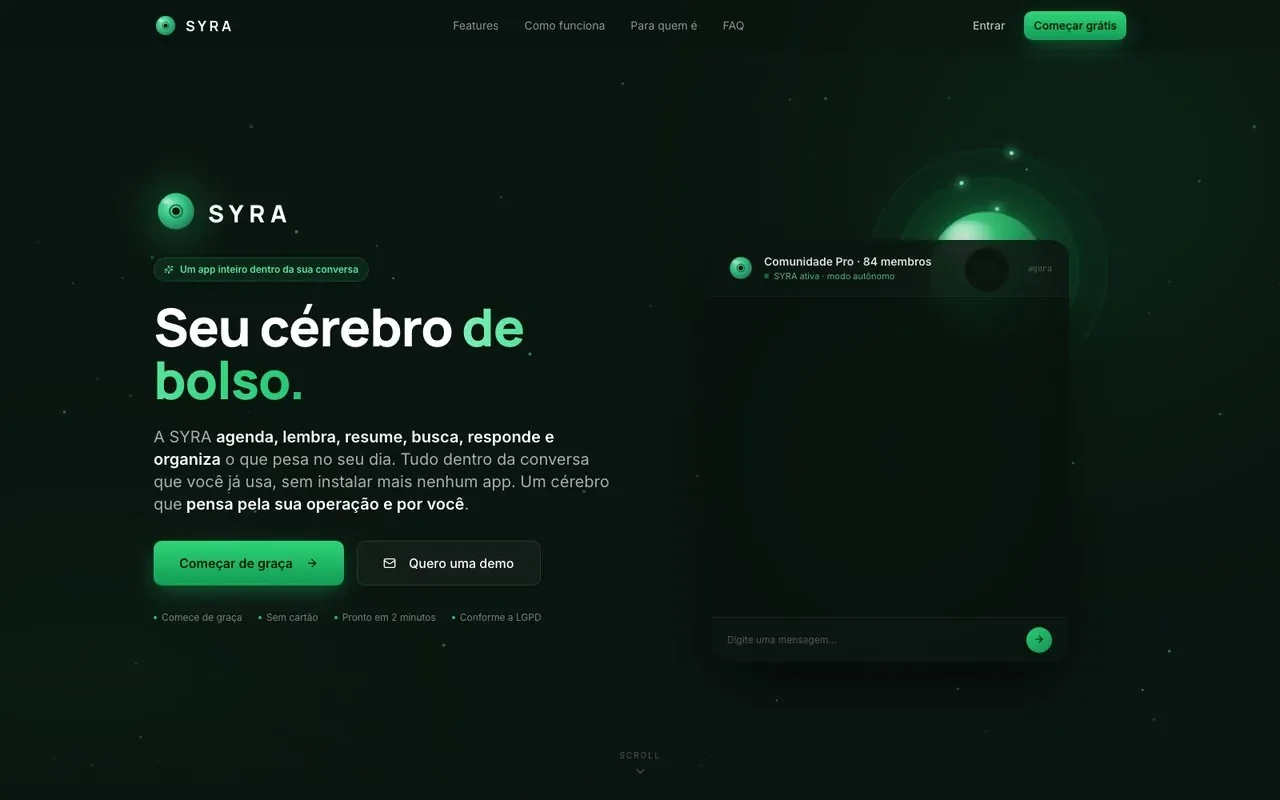
SYRA works inside WhatsApp groups. It remembers who each person is and what was agreed, extracts decisions from the conversation and returns them in the same channel without moving the team into another tool.
Engineering focus
Persistent context, multi-model
routing and human oversight in an open conversation channel.
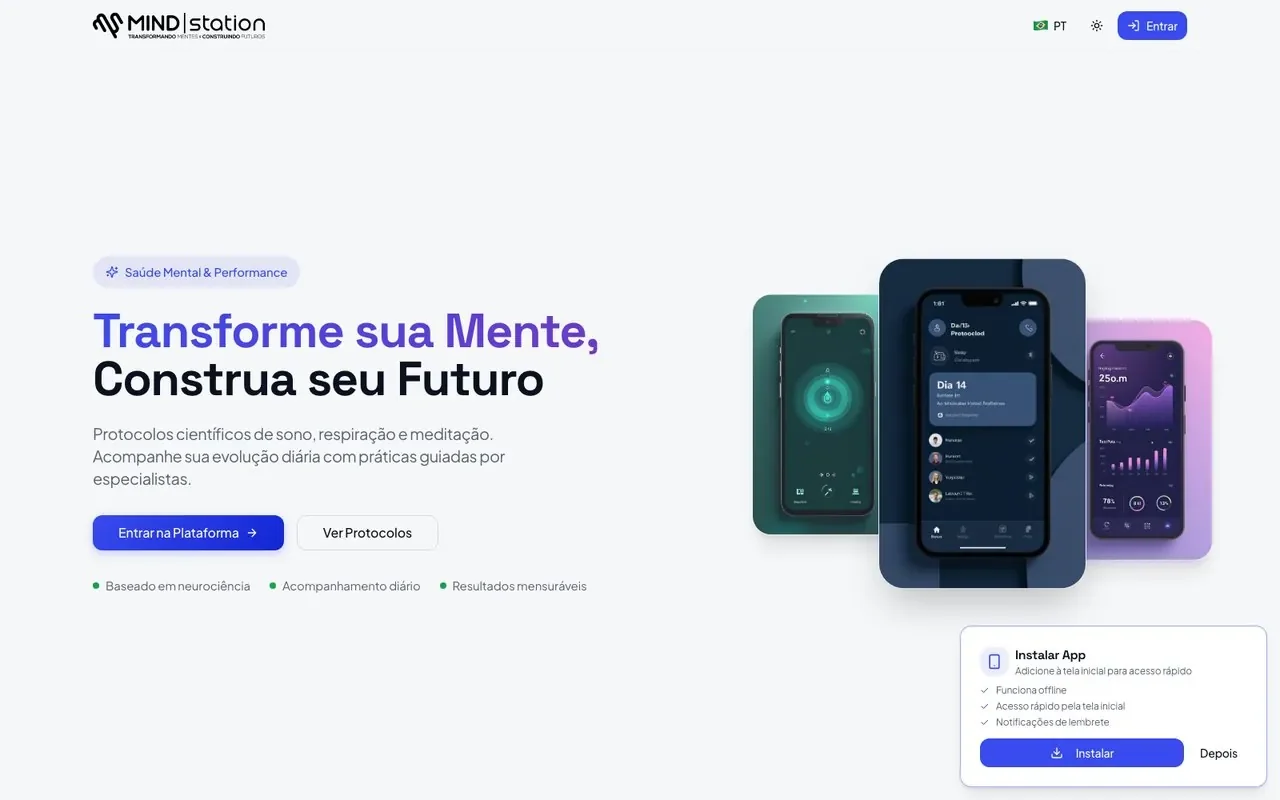
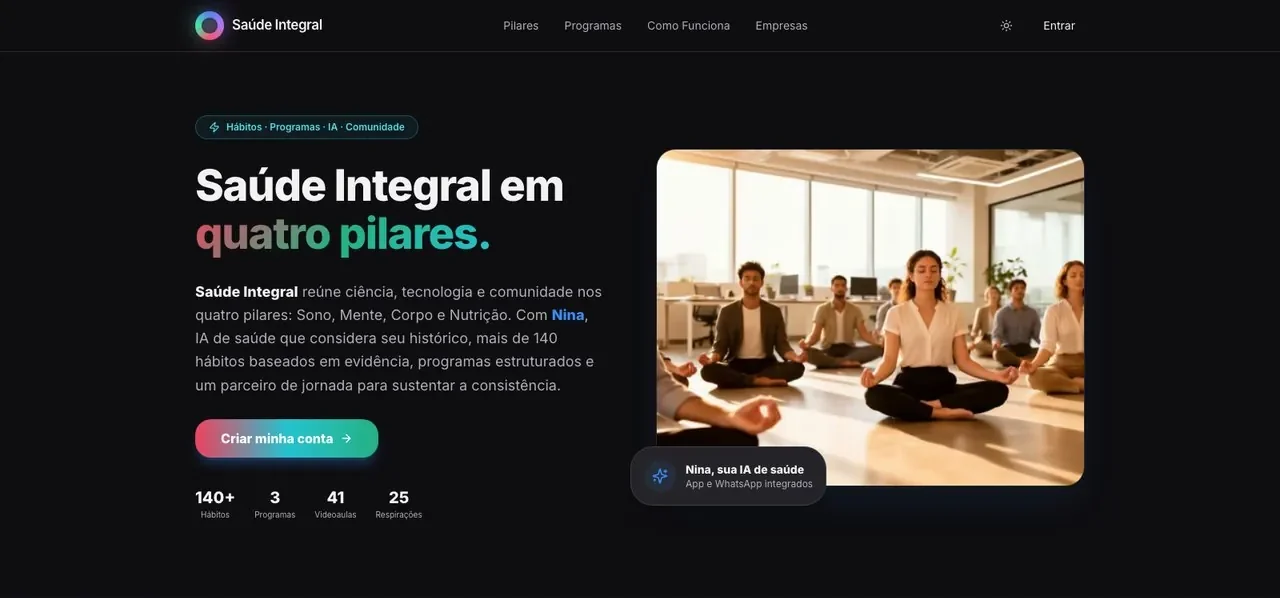
Mental health and performance protocols backed by published references. Practice, routines, metrics and journaling stay in one place, tracking each person's progress over months.
Engineering focus
Stateful journeys that resume at
the right point, even after weeks away.
More than 140 habits across sleep, mind, body and nutrition, each tied to cited literature. NINA supports users through WhatsApp within written clinical boundaries.
Engineering focus
A methodology converted into
software, with visible safeguards and human review on the
critical path.
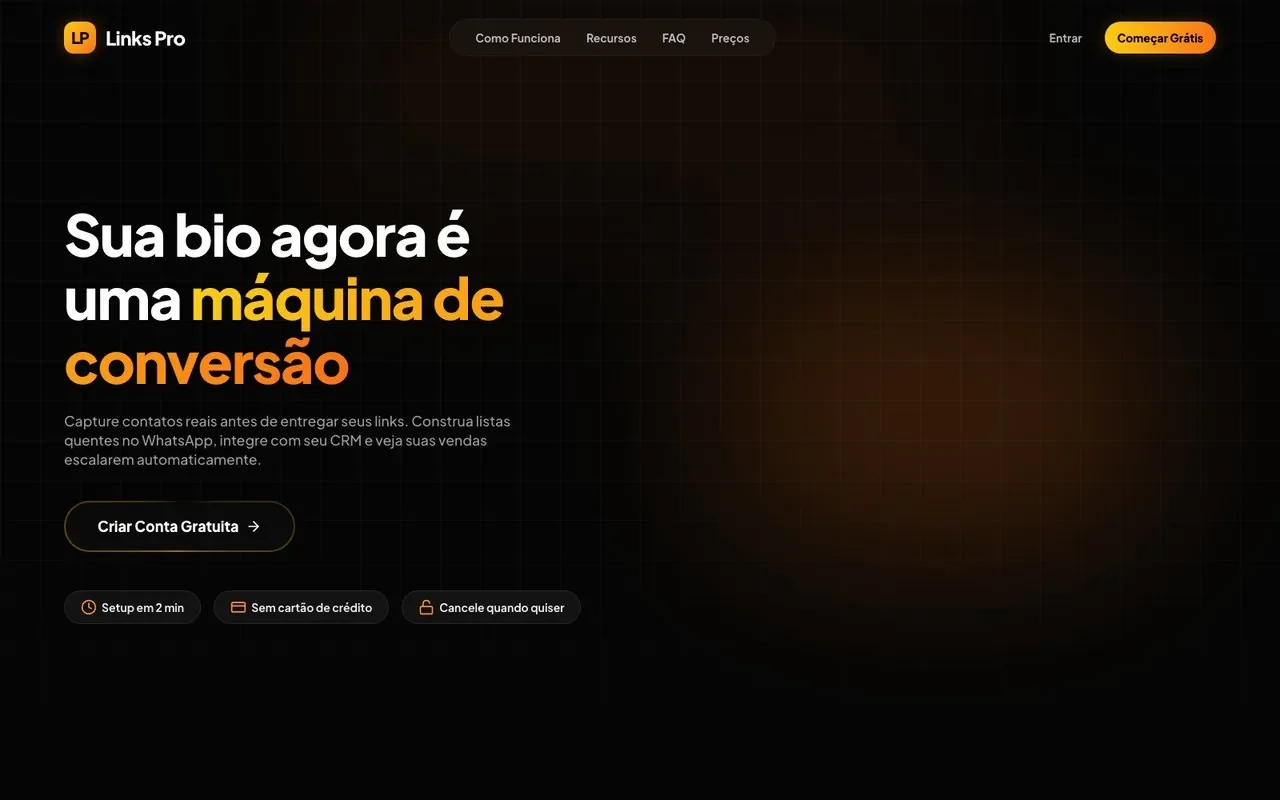
LINKSPRO turns a bio page into an acquisition flow. It qualifies a lead before releasing the link, connects payment to WhatsApp and reports qualification and conversion by link.
Engineering focus
One shared record for the public
page and the operator dashboard, without manual reconciliation.
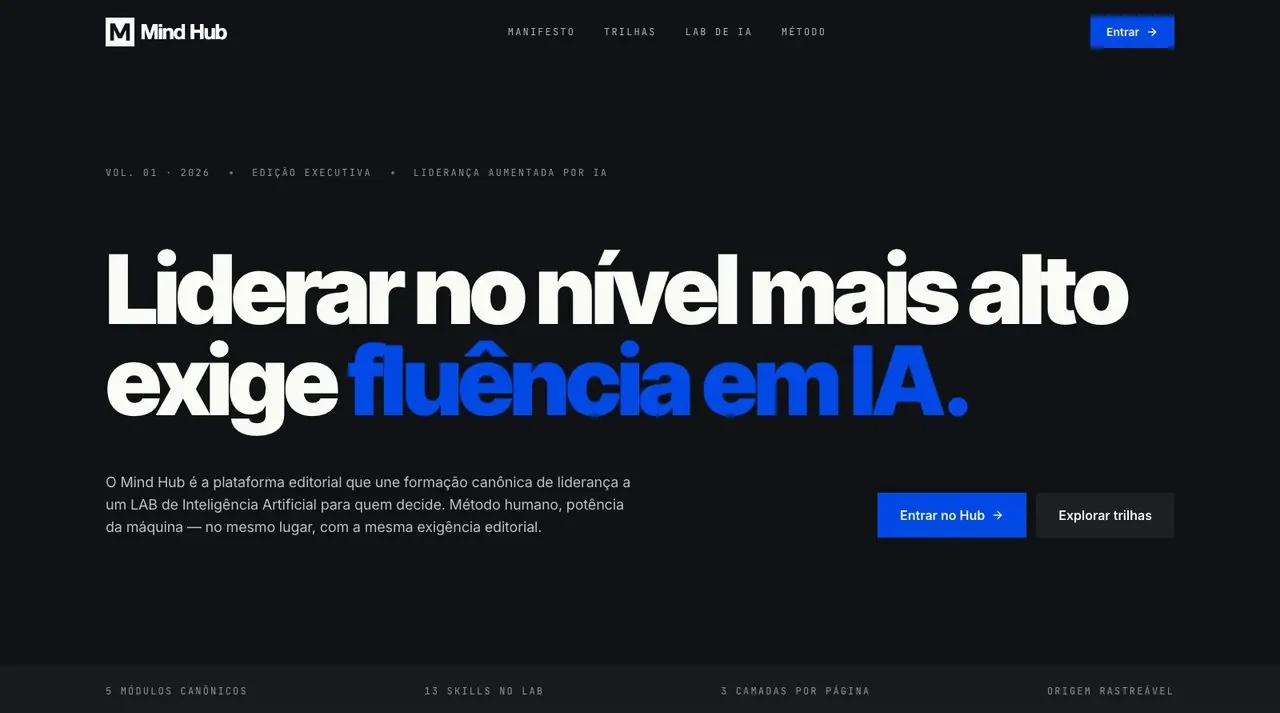
A leadership learning platform with a guided path, baseline assessment, materials and an assistant that supports reasoning while leaving the decision with the executive.
Engineering focus
Progress, assessment and knowledge
coordinated for people entering at very different starting points.
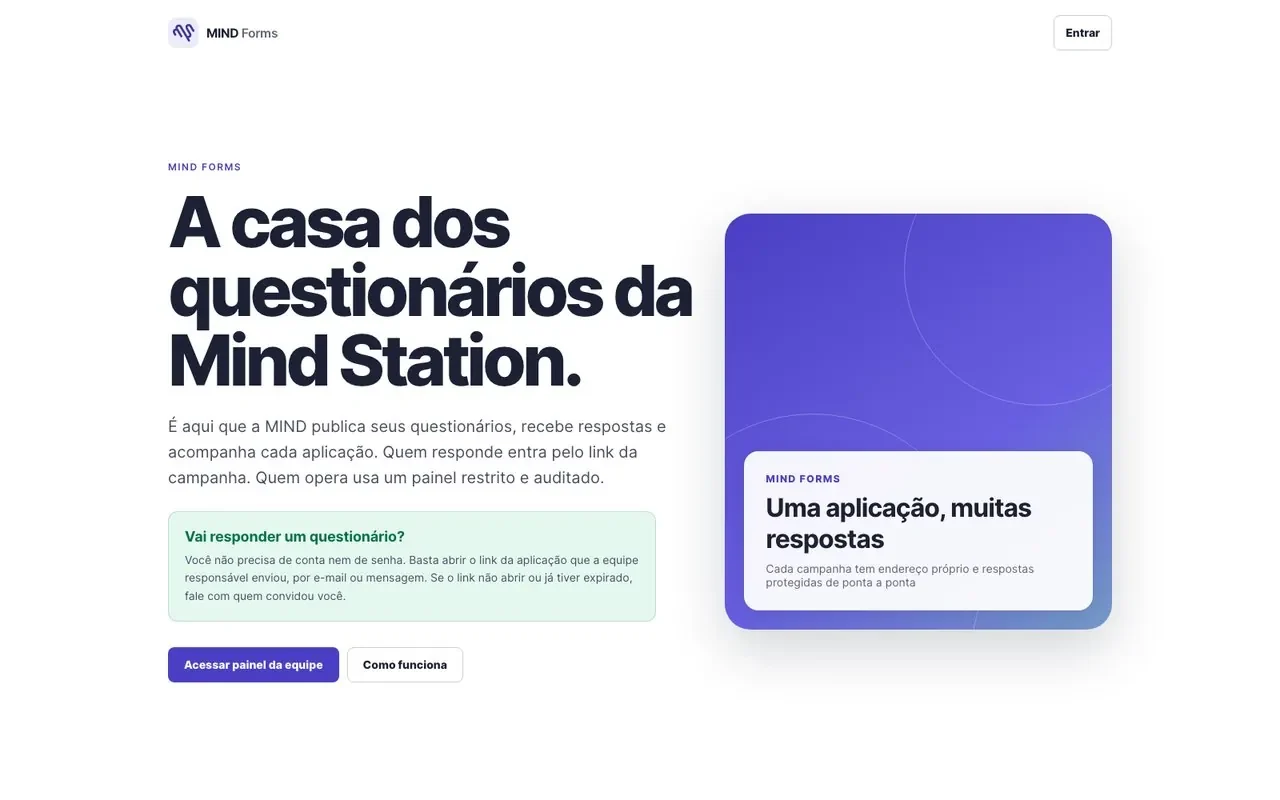
The home of MIND questionnaires. Respondents enter through a campaign link without an account or password. Operators use a restricted panel where every application is recorded.
Engineering focus
Instrument, scoring and interface
live in reviewable code. With no visual editor, no question can
change without review.
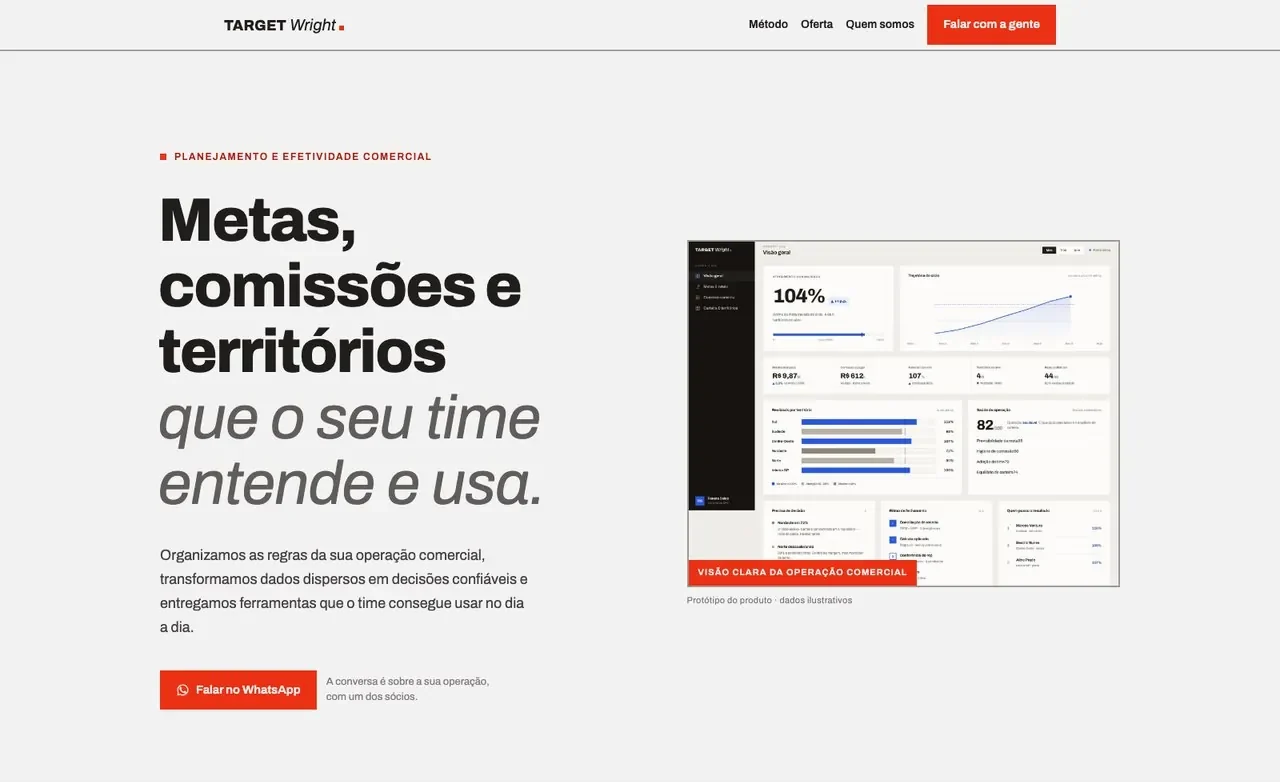
Sales targets, commissions, accounts and territories organized through explicit rules and shared numbers. The work begins with an approximately 30-day calibration of how the sales operation currently makes decisions.
Engineering focus
Informal commission and territory
rules converted into auditable calculations, with one source for
the people selling and the people paying.
We apply the same path that built the first seven to your company's next platform.
Show us the workflowThe first three figures come from MOTHERSHIP version history. The fourth reflects the public products verified on July 30, 2026.
Across 14 repositories, from February through July 2026.
SYRA, between July 12 and July 30, 2026, before production release.
Recorded in July 2026.
Seven public sites verified on July 30, 2026.
Source: GitHub API export collected on July 30, 2026, across 14 MOTHERSHIP repositories. Production deployments include only systems that record the event in their own version history, so the actual total is higher than the published figure. The reporting window begins in February 2026, when the repositories moved to the current process.
A single model call can answer well and forget everything. SYRA retains approved context, compares models on the same task and records every step. It remembers, chooses a route, shows where it stopped and returns the result in WhatsApp.
Approved context carries from one conversation to the next: who the person is, what was agreed and what remains open.
Each task goes to the appropriate model, deterministic rule or person. The router can choose, combine and compare paths in real time.
The current message is interpreted alongside authorized history before the system selects the next action.
Capabilities can enter or leave without rewriting the core. Each one carries its own scope and limits.
Decisions, commitments and alerts return to WhatsApp. The team does not need another dashboard to discover what changed.
Every decision records its route, stopping point and reviewer. Observability is part of the architecture from the first sprint, with the complete record available in production.
The same sequence works for a new platform or an existing workflow. Each step begins only after the previous one delivers what was agreed in writing. Every step ends with a usable deliverable, and you can stop without losing the work already completed.
We reconstruct how the operation works, mark where agents can act and identify where a person must decide. Acceptance criteria are written before development begins.
Deliverable: Workflow map, decision boundaries and cost by stage.
We connect authorized data, decision rules, memory, observability and failure handling. Acceptance criteria are set before code exists, so quality becomes an entry condition instead of a final check. This layer determines the production result and is where many AI projects stall.
Deliverable: Running infrastructure with documented limits and ownership.
A small part of the operation goes live with visible telemetry and a baseline for comparison. We supervise it as closely as a newly hired team. Evidence determines whether the scope expands, changes or stops.
Deliverable: Production evidence for the next decision.
We train the people who will set goals, monitor execution and adjust criteria. The stack, method and running system stay with your team.
Deliverable: A trained team, maintainable documentation and an exit date agreed from the start.
From the first map to team handoff
Every engagement combines organizational context with technical feasibility from the first conversation. The senior team that frames the problem remains accountable through delivery.
In 2026, Charles Betito and João de Lorenzo Neto took part in “The Architecture of the Expanded Human” at São Paulo Innovation Week. They also lead IA/LAB with Renato Grau, focused on using AI without outsourcing human judgment.
The same question guides every MOTHERSHIP project: how far can the system act, and at what exact point does responsibility return to a named person?
Turns technical possibilities into organizational decisions, operating criteria and behavior change.
Before founding MIND Station, Charles spent more than 16 years as a CFO, COO and founder in technology companies. He knows the side that approves the investment and the side that must make the team use it every day. At MOTHERSHIP, he frames the problem, maps decision ownership and designs the adoption required for agents to enter a workflow without displacing human judgment.
Turns operating workflows into observable systems and tests technical paths before the build.
João brings nearly 30 years across sales, retail, consumer markets, entrepreneurship and process transformation. A graduate of FGV EAESP, he worked in large-scale operations before moving into strategy and process design. He co-develops SYRA and works directly on its architecture and operating evolution.
Answer the two questions below and you will leave the conversation with a diagnosis either way: we will either scope the work or explain what is missing before agents can take on the operation.
Two or three lines per answer are enough. Please leave out client names, sensitive numbers and documents. We discuss details, timing and investment only when there is a clear reason to proceed. We select a limited number of projects each quarter.